
Many sweeteners can stand in for sugar in baking, and most bake up beautifully once you know how to handle them. Each behaves a little differently when it comes to sweetness, moisture and texture. The real trick is knowing how much to use and what to adjust as you go.
This guide walks through the most popular sugar substitutes, the exact conversion amounts to use and the small adjustments that keep your cakes, muffins and biscuits turning out just as they should.

Understanding your substitute families
Sugar substitutes generally fall into three families. Knowing which group your sweetener belongs to tells you almost everything you need to know about how it will behave in a recipe:
- Liquid Sweeteners (Honey, maple, agave and date syrups): These bring their own distinct sweetness along with a good dose of moisture. Because of that extra liquid, you will need to ease back on the other wet ingredients in the recipe so the batter doesn’t turn out too wet.
- Whole Sugars (Brown, raw, coconut and date sugars): These are the closest cousins to white sugar. They usually replace it one-for-one, bringing a subtle caramel or malty character of their own.
- Intense Sweeteners (Stevia, erythritol and xylitol): These are either far sweeter than sugar or entirely sugar-free, meaning a tiny amount goes a long way. They lack the bulk that sugar quietly provides, so you will often need a binder to hold the bake together.
The sugar substitution reference table
The table below shows how much of each substitute to use in place of 100g of white sugar, along with necessary recipe adjustments. Treat these as trusty starting points rather than hard rules, and adjust to your own taste from there.
| Substitute | Amount per 100g sugar | What to adjust | Flavour and best uses |
|---|---|---|---|
| Honey | 80g – 85g | Reduce other liquid | Mild and floral; adds moisture for a softer crumb |
| Maple syrup | 75g – 100g | Reduce other liquid | Subtle caramel note; browns beautifully |
| Agave syrup | 70g – 75g | Reduce other liquid | Sweeter than sugar; lovely in muffins and icing |
| Date syrup | 85g – 90g | Reduce other liquid | Rich and treacly; results in a darker crumb |
| Date sugar | 100g (1:1) | None | Naturally sweet; results in a touch darker bake |
| Brown or raw sugar | 100g (1:1) | None | Caramel depth; ideal for biscuits and brownies |
| Coconut sugar | 100g (1:1) | None | Caramel and malt notes; adds moisture and good browning |
| Stevia | 1g – 2g | Add a binder | Intensely sweet; needs structural support |
| Erythritol | 110g – 120g | Add a binder or adjust liquid | Slightly less sweet; provides no binding of its own |
| Xylitol | 100g (1:1) | None | Sweetness close to sugar. Note: Toxic to dogs; keep well away from pets. |
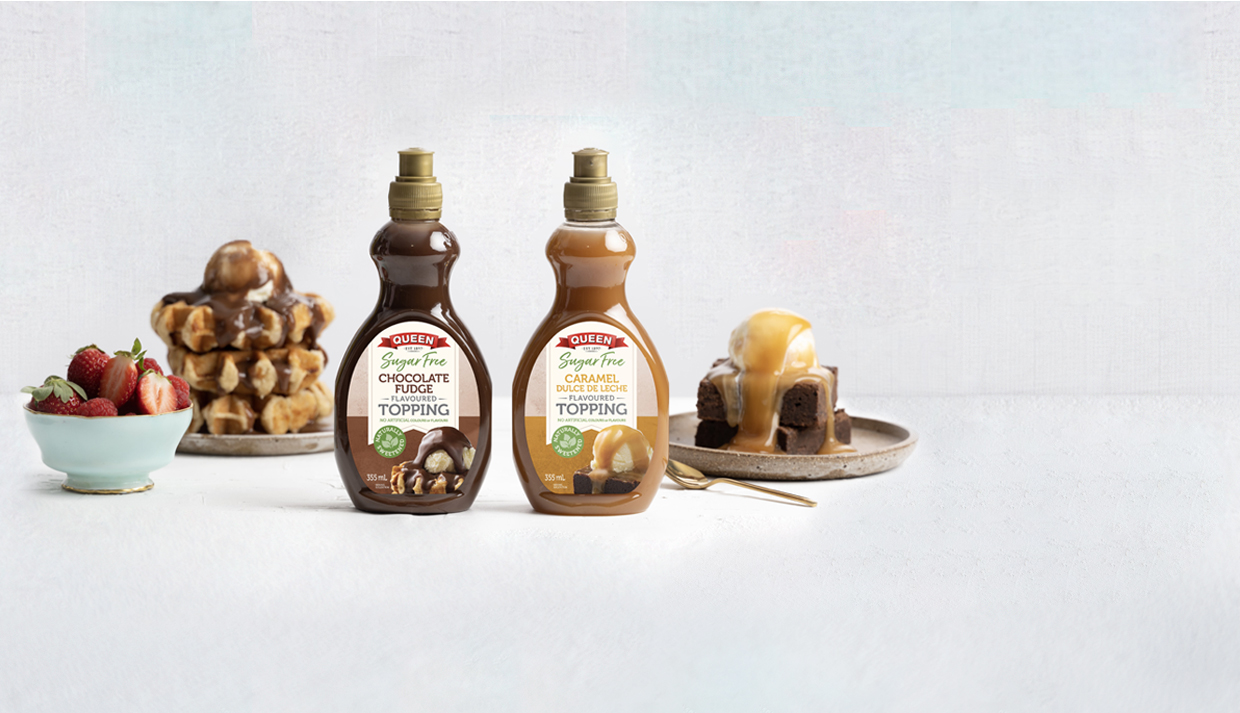
Tip: For genuine caramel depth and a beautiful golden colour, a pure maple syrup can really bring your next bake to life. And when you’d like that maple flavour on top rather than baked in, a sugar-free maple option is lovely poured over pancakes, porridge, or a finished bake.

Mastering the adjustment techniques
While the conversion ratios do most of the heavy lifting, a few small baking habits ensure total success:
1. Managing moisture and heat
Any time you reach for a liquid sweetener, trim the other liquids in the recipe by a similar volume. If you don’t, the batter will run wet and the crumb will turn dense. Additionally, honey and maple syrup colour faster than sugar in the oven, so it pays to drop the temperature by around 15°C and start checking a little earlier than the recipe suggests.
2. Restoring structure
Intense sweeteners like stevia and erythritol sweeten without adding bulk, leaving the batter with less substance to hold onto. A spoonful of cornflour, some apple purée, or a mashed banana quietly restores that missing body. This adjustment matters most in light, airy bakes like sponge cakes, where structure is critical.
3. Matching the substitute to the bake
Syrups and whole sugars are made for moist, forgiving bakes like muffins, cakes, brownies and gingerbread, where their extra moisture and flavour are a gift. Conversely, smooth icings and delicate bakes are the one place to hold back, since syrups tend to leave icing wet or grainy, meaning these recipes stay happiest with standard caster or icing sugar.

The vanilla trick for a less-sweet bake
Here is a professional secret most recipes never mention. When you want a gentler, less-sweet bake, you often don’t need a sugar substitute at all. You just need more vanilla.
Vanilla naturally heightens the sweetness our tastebuds perceive. Adding a little extra allows you to ease back on the sugar while ensuring the bake still tastes rich and rounded rather than flat. A good quality vanilla bean paste or extract works beautifully here. It is the simplest change you can make because it leaves the physical texture of your batter completely untouched. Simply trim the sugar a little, add an extra splash of vanilla, and bake.
Put it to the test in your next bake
Baking is at its most fun when you treat it as a bit of an experiment, and experimenting with sugar substitutes is a lovely place to start. So next time you reach for a Queen recipe you love, try it with a little maple in place of some of the sugar, or an extra splash of vanilla so you can use a touch less, and see how it turns out. With the ratios above to guide you, making a classic recipe your own is simple.
Frequently asked questions
What can you use instead of sugar in baking?
Plenty of options work well, from honey, maple syrup, agave and date syrup to brown and coconut sugar, and intense sweeteners like stevia, erythritol and xylitol. Each behaves differently for sweetness, moisture and texture, so the best choice comes down to what you’re baking.
How much honey do you use to replace sugar?
Use about 80 to 85g of honey for every 100g of sugar, and reduce the other liquid slightly to balance the extra moisture it brings. Since honey browns faster than sugar, lower your oven temperature a touch and check the bake a little early.
How much maple syrup replaces sugar?
Use around 75 to 100g of maple syrup in place of 100g of sugar, trimming the other liquid to account for it. Maple lends a subtle caramel note and encourages good browning, so keep an eye on the oven towards the end.
Can you replace white sugar with brown or coconut sugar?
Yes, and it’s one of the simplest substitutions there is. Brown, raw and coconut sugar all replace white sugar one for one, adding a little moisture and a caramel or malty depth that suits biscuits, brownies and gingerbread especially well.
How do you bake with stevia?
A little goes a long way, so use just 1 to 2g of stevia for every 100g of sugar. Because it adds no bulk of its own, prop up the structure with a binder like cornflour, apple purée or mashed banana, especially in light bakes.
Why did my cake turn out too wet after using a liquid sweetener?
Liquid sweeteners add moisture on top of what the recipe already holds, so the batter ends up too loose. Next time, reduce the other wet ingredients by a similar amount when you use honey, maple or another syrup, and the crumb will stay light.
Why did my cake collapse after using stevia or erythritol?
Unlike sugar, these intense sweeteners add no bulk, so the batter has little to hold its shape as it bakes. A binder such as cornflour, apple purée or mashed banana restores that missing structure and helps the cake hold up.
Can you use sugar substitutes in icing?
For smooth icing, traditional icing sugar or very fine caster sugar is still your best bet. Syrups make icing too wet to hold its shape, and coarser sweeteners often fail to dissolve cleanly, which leaves the finish grainy.
Does using less sugar make a bake taste bland?
Not if you lean on vanilla. Because vanilla heightens the sweetness we perceive, a little extra lets you pull back the sugar while the bake still tastes rich and rounded rather than flat, all without changing the texture.


Comments & Reviews